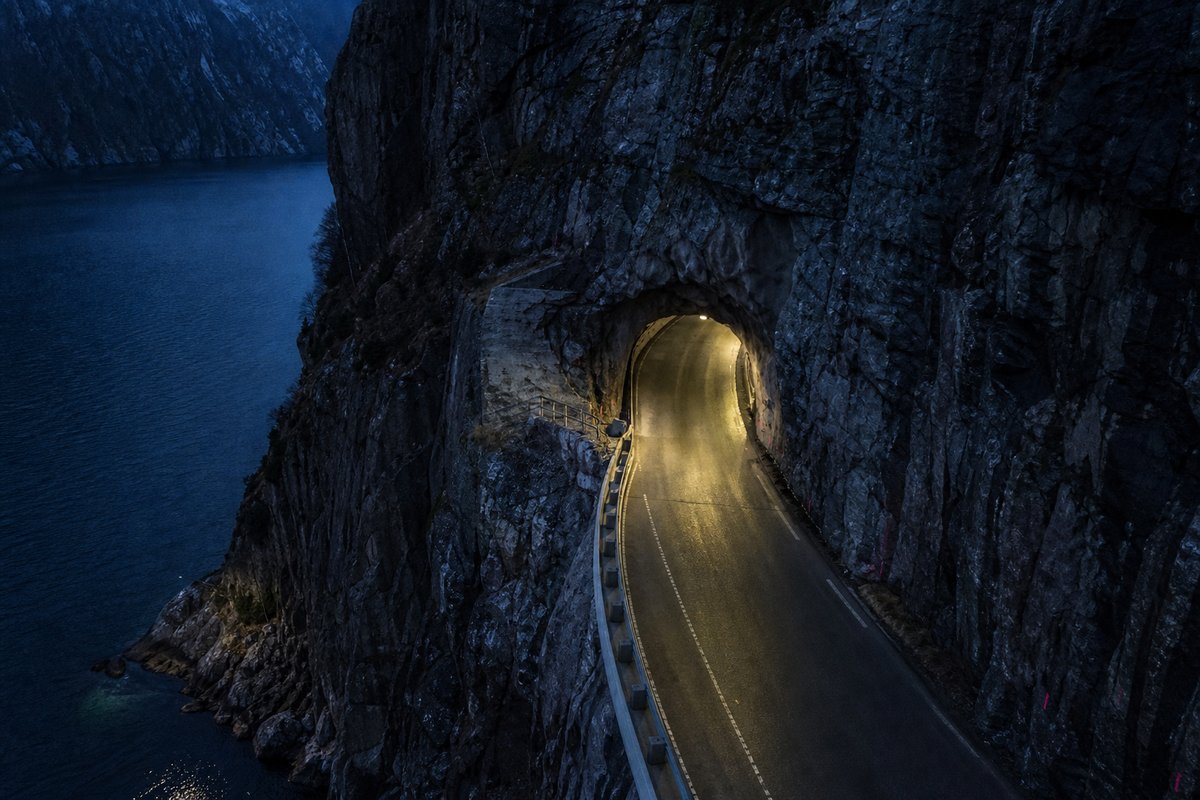
The ordering gives road tunnels in norway by length, which is the comparison most readers arrive wanting. This page is the full reference table, not a top ten, and it carries every entry that meets the inclusion rule. Treat the table as the argument and the prose as the footnote: the numbers carry the case.
The tail of the distribution is where most of the engineering interest sits, which is why nothing is trimmed from the bottom of the list. A list of road tunnels in norway is only as good as its sourcing, and each figure here comes from an operator or an administration.
The table below lists 108 entries with a recorded length, each giving a name, a length in metres and, where documented, the year of opening. The median entry measures 4.25 km, so half the table sits below that and half above, which is a better guide to the typical structure here than the headline figure.
- 108entries listed
- 24.51 kmlongest bore
- 1962–2022openings span
- 570.96 kmtotal length
The road tunnels in norway, ranked by length
How this archive measures: lengths, bores, dates and ordering
| Tunnel | Length | Date of opening | Fylke County | Notes | Road |
|---|---|---|---|---|---|
| Laerdal | 24 510 m | 27.11.2000 | 14 | "World's longest" | E 16 |
| Ryfylke | 14 498 m 14 457 m | 30.12.2019 | 11 | Subsea tunnel, 2 tubes. Start of work: 14.08.2013 | Rv. 13 |
| Gudvanga | 11 428 m | 17.12.1991 | 14 | Gudvangen - Flåm | E 16 |
| Folgefonn | 11 150 m | 15.06.2001 | 12 | Odda - Mauranger | Fv 551 |
| Toven | 10 690 m | 22.11.2014 | 18 | Helgeland. Connection Fv. 17 - E6 | Fv 78 |
| Jondal | 10 050 m | 7.09.2012 | 12 | Mauranger - Jondal | Fv 107 |
| Mælefjell | 9 355 m | 19.12.2019 | 08 | Gvammen - Århus | E 134 |
| Korgfjell | 8 533 m | 16.09.2005 | 18 | Mosjøen - Korgen | E 6 |
| Steigen | 8 092 m | 12.07.1990 | 18 | Steigen | Fv 835 |
| Bømlafjord | 7 931 m | 28.12.2000 | 12 | Subsea tunnel (-262.5 m) | E 39 |
| Eiksund | 7 849 m | 23.02.2008 | 15 | The World's deepest subsea road tunnel (-287 m) | Fv 653 |
| Karmøy | 7 741 m | 05.09.2013 | 11 | Subsea tunnel Karmsund&Førdesfjord (+1164 m Haugesund connection) | Rv 47 |
| Svartisen | 7 624 m | 16.10.1986 | 18 | Glomfjord | Fv 17 |
| Oppdølstrand | 7 578 m | 15.08.2014 | 15 | Sunndalsøra - Ålvundeid | Rv 70 |
| Høyanger | 7 543 m | 25.05.1982 | 14 | Høyanger - Lånefjorden | Fv 55 |
| Vallavik | 7 510 m | 27.04.1985 | 12 | Granvin - Bruravik | Rv 7 |
| Åkrafjord | 7 404 m | 15.07.2000 | 12 | Fjæra - Etne | E 134 |
| Oslofjord | 7 273 m | 29.06.2000 | 1 - 6 | Subsea tunnel (-134 m) | E 134 |
| Nordkapp | 6 870 m | 15.06.1999 | 20 | Subsea tunnel (-150 m) | E 69 |
| Frudal | 6 758 m | 29.10.1995 | 14 | Sogndal - Fjærland | Rv 5 |
| Fodnes | 6 604 m | 29.09.1995 | 14 | Lærdal - Fodnes | Rv 5 |
| Innfjord | 6 601 m | 01.11.1991 | 15 | Innfjorden - Åndalsnes | E 136 |
| Kvivs | 6 578 m | 22.09.2012 | 15 | Volda - Grodås | E 39 |
| Knappe | 6 523 m 6 511 m | 12.11.2015 | 12 | Bergen (Dolvik - Sandeide 10.09.2010) | Fv 557 |
| Fjærland | 6 404 m | 31.05.1986 | 14 | Fjærland - Skei | Rv 5 |
| Sørdals | 6 392 m | 01.12.2007 | 18 - 19 | Hinnøya | E 10 |
| Hundvåg | 6 167 m 6 144 m | 22.04.2020 | 11 | Subsea tunnel, Stavanger | Rv. 13 |
| Naustdal | 5 970 m | 18.08.1995 | 14 | Naustdal - Eikefjorden | Rv 5 |
| Øksendal | 5 965 m | 28.10.2000 | 15 | Sunndalsøra - Øksendal | Fv 62 |
| Byfjord | 5 875 m | 30.11.1992 | 11 | Subsea tunnel near Stavanger (-223 m) | E 39 |
| Tosen | 5 857 m | 07.1987 | 18 | Trofors - Brønnøysund | Fv 76 |
| Nogvafjord | 5 820 m | 2022 | 15 | Subsea tunnel (-134 m) Nordøyvegen | Fv. 659 |
| Atlanterhavs | 5 788 m | 19.12.2009 | 15 | Averøy - Kristiansund in Møre og Romsdal (-245 m) | Fv. 64 |
| Filefjell | 5 775 m | 29.09.2017 | 14 | Tyin - Lærdal | E 16 |
| Finnøy | 5 766 m | 30.10.2009 | 11 | Rennesøy - Finnøy + a 1450 m long tunnel to Talgje (-150 m) | Fv 519 |
| Nordnes | 5 736 m | 10.11.2018 | 19 | Kåfjord | E 6 |
| Haukeli | 5 682 m | 1968 | 12 | Røldal - Haukeliseter | E 134 |
| Hitra | 5 650 m | 08.12.1994 | 16 | Subsea tunnel (-264 m) | Fv 714 |
| Frøya | 5 301 m | 23.06.2000 | 16 | Subsea tunnel (-164 m), Hitra - Frøya | Fv 714 |
| Heggur | 5 292 m | 1981 | 15 | Tafjord | Fv 5928 |
| Freifjord | 5 109 m | 20.08.1992 | 15 | Subsea tunnel (-130 m) to Kristiansund | Rv 70 |
| Flenja | 5 053 m | 1986 | 14 | Local road Flåm - Undredal 1986 - 1991 | E 16 |
| Eikefet | 4 910 m | 09.07.1980 | 12 | Bjørsvik - Romarheim | E 39 |
| Bortne | 4 806 m | 16.05.2013 | 14 | Bremanger | Fv 616 |
| Svo | 4 733 m | 29.11.2013 | 11 | Tysdalsvatnet | Rv 13 |
| Røldal | 4 657 m | 1964 | 12 | Seljestad - Røldal | E 134 |
| Sørkjos | 4 620 m | 2.02.2018 | 19 | Nordreisa | E 6 |
| Oppljos | 4 594 m | 17.10.1978 | 5 - 12 | Grotli - Hjelle | Rv 15 |
| Kobbskaret | 4 457 m | 1986 | 18 | Sørfold, Fauske - Narvik | E 6 |
| Mastrafjord | 4 424 m | 30.11.1992 | 11 | Subsea tunnel (-132 m) near Stavanger | E 39 |
| Honningsvåg | 4 443 m | 15.06.1999 | 20 | Nordkapp | E 69 |
| Øksfjord | 4 292 m | 1988 | 20 | Storvik - Bardines, Loppa | Fv 882 |
| Bagnskleiv | 4 285 m | 29.10.2019 | 5 | Bagn - Bjørgo | E 16 |
| Berdal | 4 270 m | 1973 | 14 | Hol - Aurland | Rv 50 |
| Valderøy | 4 225 m | 20.10.1987 | 15 | Subsea tunnel (-137 m) to Ålesund airport | Rv 658 |
| Hundorp | 4 164 m | 17.12.2016 | 5 | Ringebu - Kvam | E6 |
| Halsnøy | 4 120 m | 08.03.2008 | 12 | Subsea tunnel, Kvinnherad | Fv 544 |
| Masfjord | 4 110 m | 07.12.1995 | 12 | Romarheim - Matre | E 39 |
| Tunsberg | 4 080 m | 20.12.2011 | 12 | Granvin - Voss | Rv. 13 |
| Borlaug | 4 090 m | 10.07.2014 | 14 | Tyin - Lærdal | E 16 |
| Toppen | 3 989 m | 1996 | 19 | Grytøya | Fv 7756 |
| Rotsethorn | 4 026 m | 27.05.2004 | 15 | First section: 2 176 m (19.06.1999) | E 39 |
| Hell | 3 924 m | 18.10.1995 | 16 - 17 | Trondheim - Stjørdal | E 6 |
| Breivik/Sentrumstangenten | 3 899 m | 1992/1999 | 19 | Connected tunnels: 2302 m + 204 m + 838 m + 555 m | Rv 862 |
| Nordby | 3 867 m | 1993 | 2 | 2 tubes, Vestby - Vinterbro | E 6 |
| Øyer | 3 873 m | 12.12.2012 | 5 | Lillehammer - Tretten | E 6 |
| Godøy | 3 849 m | 1988 | 15 | Subsea tunnel (-153 m) near Ålesund | Fv 5957 |
| Fløyfjell | 3 825 m 3 195 m | 07.07.1988 1989 | 12 | Bergen | E 39 |
| Frafjord | 3 812 m | 10.06.1999 | 11 | Gilja - Frafjord | Fv 4414 |
| Streke | 3 806 m | 21.08.2013 | 15 | Hellesylt - Stranda | Fv 60 |
| Lunner | 3 803 m | 11.10.2003 | 2 - 5 | Lunner - Nannestad | E 16 |
| Hvaler | 3 751 m | 02.10.1989 | 1 | Subsea tunnel (-120 m) | Fv 108 |
| Teigkampen | 3 747 m | 17.12.2016 | 5 | Ringebu - Kvam | E 6 |
| Strømsås | 3 738 m | 16.10.2001 | 6 | Drammen bypass | E 134 |
| Grasdal | 3 720 m | 17.10.1978 | 14 | Grotli - Hjelle | Rv 15 |
| Fjørtoftfjord | 3 720 m | 2022 | 1 | Subsea tunnel (-118 m) | Fv 659 |
| Vågstrand | 3 706 m | 18.12.2014 | 15 | Åndalsnes - Tresfjord | E 136 |
| Nøstvedt | 3 668 m | 09.09.2009 | 2 | Assurtjern - Vinterbru. 2 tubes | E 6 |
| Ørgenvik | 3 635 m | 27.06.2014 | 6 | Sokna - Ørgenvika | Rv 7 |
| Eiganes | 3 774 m 3 728 m | 22.04.2020 | 11 | Stavanger | E 39 |
| Ljø | 3 699 m | 17.12.2016 | 14 | Replaces old tunnel Ljønibbe - Hamregjøl (22.09.1962) | Fv 60 |
| Storsand | 3 671 m | 30.06.2005 | 16 | Orkanger - Klett | E 39 |
| Umskar | 3 670 m | 31.10.2006 | 18 | Mo i Rana - Sweden | E 12 |
| Brattli | 3 606 m | 1992 | 18 | Kjøpsvik - Sætran | Fv 827 |
| Soknedal | 3 604 m | 16.10.2020 | 16 | Berkåk - Støren | E6 |
| Haramsfjord | 3 540 m | 12.2021 | 15 | Subsea tunnel (-110 m) Nordøyvegen | Fv. 659 |
| Ellingsøy | 3 536 m | 120.10.987 | 15 | Subsea tunnel (-144 m) to Ålesund airport | Rv 658 |
| Vike | 3 535 m | 1990 | 15 | +1100 m lengthening (2005) | Fv 191 |
| Stordal | 3 533 m | 27.06.1998 | 15 | Dyrkorn - Stordal | Fv 650 |
| Tromsøysund | 3 492 m 3 379 m | 03.12.1994 | 19 | Subsea tunnel (-102 m) | E 8 |
| Bogs | 3 489 m | 11.06.2004 | 14 | Lavik - Vadheim | E 39 |
| Skarvberg | 3 470 m | 2021 | 20 | Start of work: 2018 (old Skarvberg tunnel: 2 970 m) | E 69 |
| Modalen | 3 451 m | 03.07.1976 | 12 | Modalen - Eksingedalen | Fv 569 |
| Ailegas | 3 445 m | 22.11.2018 | 20 | Alta | E 6 |
| Hjartåberg | 3 505 m | 10.2013 | 15 | Volda | E 39 |
| Ibestad | 3 418 m | 02.12.2000 | 19 | Subsea tunnel (-112 m) Andørja - Rolla | Fv 848 |
| Sløverfjord | 3 336 m | 1998 | 18 | Subsea tunnel (-120 m) Austvågøya | E 10 |
| Pollfjellet | 3 306 m | 1983 | 19 | Lyngen | Fv 868 |
| Ravnehei | 3 300 m | 24.11.2009 | 10 | Between Kjörrefjord and Ulland (near Farsund) | Fv 465 |
| Kvernsund | 3 200 m | 15.12.2018 | 19 | Subsea tunnel (-127 m) Grytøya - Bjarkøya | Fv 867 |
| Geiteryggen | 3 281 m | 1973 | 6 | Hol - Aurland | Fv 50 |
| Kjernfjell | 3 249 m | 17.10.2019 | 18 | Junkerdalen | Rv 77 |
| Isfjell (Iisavari) | 3 246 m | 29.10.2005 | 19 | Skardalen - Birtavarre, Kåfjord | E 6 |
| Straumdal | 3 232 m | 10.1992 | 18 | Jektvika - Ågskaret | Fv 17 |
| Vatland | 3 178 m | 01.09.2006 | 10 | Lyngdal - Flekkefjord | E 39 |
| Storvikskaret | 3 116 m | 07.07.1995 | 18 | Ørnes - Løding/Tverlandet | Fv 17 |
| Ljønibbe - Hamregjøl | 3 090 m | 22.09.1962 | 15 | Two connected tunnels (Replaced by Ljø tunnel 17.12.2016) | Rv 60 |
| Borgund | 3 050 m | 06.07.2004 | 14 | Tyin - Lærdal | E 16 |
| 11 | Rogaland |
|---|---|
| 12 | Hordaland |
| 14 | Sogn og Fjordane |
| 15 | Møre og Romsdal |
| 16 | Sør-Trøndelag |
| 17 | Nord-Trøndelag |
| 18 | Nordland |
| 19 | Troms |
| 20 | Finnmark |
| 1, 2, 6 | Østfold, Akershus, Buskerud | Viken |
|---|---|---|
| 3 | Oslo | Oslo |
| 4, 5 | Hedmark, Oppland | Innlandet |
| 7, 8 | Vestfold, Telemark | |
| 9, 10 | Aust-Agder, Vest-Agder | Agder |
| 11 | Rogaland | Rogaland |
| 12, 14 | Hordaland, Sogn og Fjordane | Vestland |
| 15 | Møre og Romsdal | Møre og Romsdal |
| 16, 17 | Sør-Trøndelag, Nord-Trøndelag | Trøndelag |
| 18 | Nordland | Nordland |
| 19, 20 | Troms, Finnmark |
Measuring length, and why sources disagree
The entries sum to roughly 570.96 km of bore, an average of about 5.29 km each, though that average describes no actual row. The middle half of the table runs from 3.67 km to 6.12 km, and that band is where most of the engineering on this page actually sits.
The shortest recorded entry is 3.05 km against 24.51 km at the top, a spread of 8.04x across the same table. The three longest entries alone account for 50.44 km of the 570.96 km on this page, which is 9 per cent of the total from 3 of 108 rows.
54 entries sit above the median and 54 at or below it, so the table is evenly weighted and not clustered at one end. Between the longest and the tenth-longest the drop is 16.58 km, which is the part of the table that changes when a single scheme opens.
Roughly 59 of the dated entries opened in this century, which is a rough measure of how much of the network is recent. Where one of these 108 lengths disagrees with an operator's own figure for Norway, the table keeps the published value and notes the difference instead of averaging the two.
The longest stands 10.01 km clear of the next longest, which is the margin to watch when a new scheme is announced. Lengths for Norway are recorded in metres which is how the operators publish them and why the shortest entry here reads as 3 050 m and not a rounded figure.
Subsea bores, rock cover and gradient
A new scheme in Norway would have to beat 24.51 km to change the head of this table, and that is the figure worth rechecking when one opens. The 108 rows for Norway are ordered by length, not by date, so the 2022 opening sits well down the table without being any less current.
66 of the 108 entries fall within a quarter of the median length, which is how tightly this particular list clusters around its typical structure. The longest entry is 8.0 times the shortest and 5.8 times the median, which is the quickest measure of how uneven the table is.
Readers who want road tunnels in norway by length and not a curated shortlist will find exactly that here. Where a figure could not be sourced the cell is left blank, so what is shown is measured and nothing is inferred. Where two sources disagree on a length, the operator's own published length is preferred.
34 of the dated entries opened from 2010 onwards, which shows how much of what is listed here is recent construction and not historic work. Eighth on the list is Korgfjell at 8.53 km, which is where the table stops being about record holders and starts being about ordinary infrastructure.
Fjord crossings and the ferry links they replaced
The dated entries fall across 45 different years, which is a rough measure of whether this was a sustained programme or a handful of separate schemes. The ten longest average 11.62 km against 4.64 km for everything below them, and that ratio is the clearest thing this table says about the distribution.
Sorting on that one dimension is imperfect, since geology decides difficulty, but it is the measure published consistently enough to rank on. Laid end to end the entries on this page would run 570.96 km, which is a number with no engineering meaning but a useful sense of the scale of what is catalogued.
Reading a list of road tunnels in norway
Dated entries run from 1962 to 2022, and the busiest decade is the 2010s with 27 recorded openings. The table on this page runs to 108 rows and records Tunnel, Length, Date of opening, Fylke County and Notes for each of them, which is the shape the original compiler chose rather than one imposed here.
Nothing in this table is estimated: where a value could not be sourced it is left blank. Read down the length column, the 102 values run from 3 050 m to 24 510 m with a midpoint at 4 248 m; the spread rather than the maximum is what says how uneven this set is.
Length is recorded in metres for every entry, and length alone decides the sort order. 108 of the 108 rows carry an entry in the notes column — 100 per cent of the table — and that column is where the qualifications live: tube counts, closures, boundaries and the reason a figure reads the way it does.
The dated entries carry 45 distinct opening years across 60 years, and the median opening year is 2000. The material on this page is held in 28 captions rather than in running text, 201 words of it, each written against the image or row it belongs to by the compiler who put the page together.
The 2010s account for 27 openings here and the 1990s for 25, so the building effort was not spread evenly across the period. The captions name 27 distinct places and structures — Ålesund, Stavanger and Kristiansund among them — and those names are the index into the length tables where each is recorded with its own figure.
Fjord crossings replaced ferry links, which is why so many carry a low subsea profile. A tunnel list for Norway reads differently from a neighbouring country's: 108 of these 108 structures pass three kilometres, and the same journey time is bought with one long bore in one country and a dozen short ones in another.
The tunnel column names 108 distinct entries on this page, Laerdal and Ryfylke among them, each traceable to the operator or administration record it was taken from. The fylke county column sorts these 108 rows into 19 groups, the largest being 15 with 20, then 14 with 16 and 12 with 14.
What follows is a list of road tunnels in norway and not a selection, with every row traceable to a published source. Subsea bores run beneath a fjord or strait with rock cover, not water, above the lining. Second and third place go to Ryfylke at 14.5 km and Gudvanga at 11.43 km.
Subsea tunnels are pumped continuously, and their low point sits well below sea level. Anyone comparing these figures across borders should read the note column too, since national practice varies. The shorter half of the table totals 196.17 km against 374.79 km for the longer half, from the same number of rows.
Fjord crossings are the defining Norwegian tunnelling problem. This page records the road tunnels catalogued for Norway in a tunnel almanac maintained at this address since the late 1990s. After the 2010s the next busiest decade here is the 1990s with 25 openings, so the building effort came in more than one wave.
The longest entry is Laerdal, at 24.51 km, opened in 2000. Further down the table, Toven is recorded at 10.69 km and Jondal at 10.05 km. Only Laerdal sits within ten per cent of the longest figure, so one structure stands 10.01 km clear of the field here.
42 of the 108 measured entries exceed five kilometres, and those are the ones that carry a full ventilation and escape regime. 6 entries reach ten kilometres and 1 reach twenty, a distribution that decides how much of this table needs full mechanical ventilation. Road tunnel lengths are measured portal to portal along the carriageway.
Dates for Norway refer to opening to traffic, not breakthrough, so the 1962 entry was under construction for some years before that. Openings average one every 0.6 years across the dated entries here, though they arrive in clusters, not at that rate. Administrative boundaries have been redrawn in several countries since these lists were first assembled.
The earliest dated entry is Gudvanga, opened in 1991, and the most recent is Ryfylke in 2019. Ventilation and escape provision, not bore length, drive most of the cost on modern road tunnels in Norway. A disused tunnel is expensive to fill and cheap to seal, which is why so many survive behind a wall.
Questions about Norway
What is the longest road tunnel in Norway?
On the figures recorded here it is Laerdal, at 24.51 km, opened in 2000. It heads a table of 108 entries ordered by bore length, not by span, cost or construction difficulty.
How many road tunnels are listed for Norway?
108 entries with a recorded length appear on this page, from 3.05 km at the short end to 24.51 km at the top, with the middle of the set around 4.25 km.
How far back do the opening dates go?
The earliest dated entry opened in 1962 and the most recent in 2022, so this page covers 60 years across 45 distinct opening years. A date here is the opening to traffic, which on these 107 dated rows is one to two years after breakthrough.
What is a typical length among the road tunnels listed for Norway?
The median entry measures 4.25 km and the middle half of the table runs from 3.67 km to 6.12 km. The headline figure of 24.51 km is the outlier, not the norm, which is why the median is the more useful number when comparing one national list against another.
When were most of the road tunnels in Norway built?
The busiest decade recorded here is the 2010s, with 27 openings, then the 1990s with 25, and 59 of the dated entries opened from 2000 onwards. That is 25 per cent of the 107 dated rows in a single decade, which says as much about when the route was funded as about the engineering.
Other pages in this section
- Bridges and Viaducts in Norway — 58 Listed by Length
- Bridges and Viaducts in Norway — 59 Listed by Length
- Road Tunnels in Norway — Complete List by Length, Part 1000
- Road Tunnels in Norway — Complete List by Length, Part 2000
- Railway Tunnels in Norway — Complete List by Length
- Subsea Road Tunnels in Norway, with Length, Maximum Depth and Gradient
Operators and administrations
- Road bridges and viaducts in Norway en.wikipedia.org
The single external address listed above was checked against the content of the page it leads to, not merely its status code, and it still holds the material it was listed for.
Cite this page
Road Tunnels in Norway: Subsea Bores and Fjord Crossings by Length. The World's Longest Tunnels. https://www.lotsberg.net/data/norway/list.html
Related record tables
- Road Tunnels in Bosnia and Herzegovina — 63 Listed by Length
- Road Tunnels in the United Kingdom — 53 Listed by Length
- Road Tunnels in the United States, Part 000
- Road Tunnels in the United States: Full List by Length
- Road Tunnels in Andorra — 6 Listed by Length
- Road Tunnels in Argentina — 8 Listed by Length
- Road Tunnels in Australia — 38 Listed by Length
- Road Tunnels in Austria, Part 000 — 183 Listed by Length
- Road Tunnels in Austria, Part 250 — 109 Listed by Length
- Road Tunnels in Austria, Part 500 — 100 Listed by Length
- Road Tunnels in Austria — 116 Listed by Length
- Road Tunnels in Belgium — 67 Listed by Length